A manufactured home can be an excellent purchase, but the financing or insurance process may stop cold if the home’s support system cannot be properly documented. A manufactured home foundation certification helps answer a critical question for lenders, insurers, buyers, and sellers: Is the home properly supported, anchored, and installed for its intended use?
For Central Florida buyers, this is rarely a detail to leave until the final week before closing. A foundation concern can lead to repair negotiations, underwriting questions, delayed loan approval, or an insurance issue that neither party expected. Knowing what the certification involves and ordering the right evaluation early can protect both the transaction and your investment.
What a manufactured home foundation certification verifies
Manufactured homes are built in a controlled factory environment and then transported to the site. Once delivered, they must be installed on an approved support and anchoring system. The foundation may include piers, footings, anchors, tie-downs, beams, and perimeter components that work together to support the home and resist wind forces.
A foundation certification is documentation addressing whether the installed foundation and anchoring system meet the applicable standards or loan-program requirements. The exact scope depends on the purpose of the report and the requirements of the lender, insurer, or agency involved.
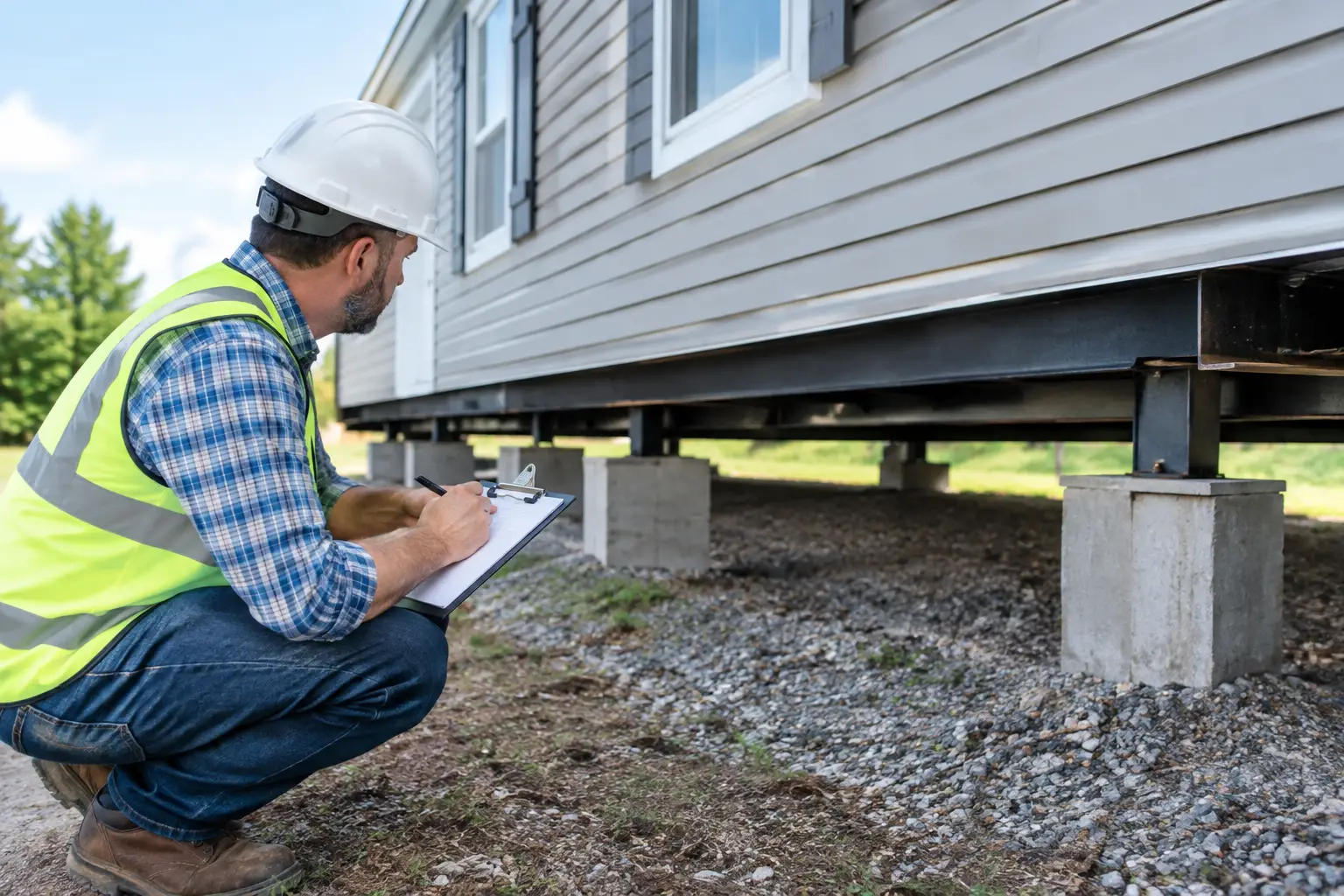
In many transactions, the evaluation focuses on visible and accessible conditions, including the home’s support piers, footings where visible, beams, leveling, anchors, straps, tie-down connections, vapor barrier conditions, and signs of movement or deterioration. The report may also identify alterations, additions, or site conditions that affect the home’s support system.
The word “certification” can create confusion. An inspection report and an engineer’s certification are not always the same document. Some lenders, particularly for certain government-backed loans, may require a certification from a licensed professional engineer stating that the permanent foundation meets specific criteria. Before scheduling service, confirm exactly what your lender or insurer needs. That simple call can prevent ordering a report that does not satisfy underwriting.
Why lenders and insurers ask for it
A site-built home is generally expected to sit on a conventional permanent foundation. Manufactured homes have different construction and installation standards, so lenders need documentation that the home is securely installed and eligible for the loan product being used.
The concern is practical, not merely paperwork. A home that is inadequately supported can settle unevenly, develop floor or wall issues, experience door and window misalignment, or become more vulnerable during severe weather. In Florida, wind resistance and proper tie-downs deserve particular attention.
A lender may request foundation documentation when a buyer is using FHA, VA, USDA, or conventional financing, although requirements vary by lender and loan program. Refinancing can trigger the same request. Insurers may also want evidence of proper anchoring or may require a separate inspection related to tie-downs and wind exposure.
It depends on the home’s age, location, financing type, installation history, and the documentation already available. A seller who has owned a home for years may never have been asked for a certification. That does not mean a new buyer’s lender will waive it.
When to order a manufactured home foundation certification
The best time is early in the due-diligence period, not after appraisal, underwriting, and repair negotiations are already underway. If you are buying a manufactured home, ask your lender about foundation requirements as soon as you begin the loan application. If certification is likely, schedule the evaluation promptly.
Sellers benefit from the same proactive approach. A pre-listing foundation and tie-down evaluation can reveal conditions that may concern a buyer, appraiser, lender, or insurer. Addressing a loose strap, deteriorated pier, missing component, or moisture condition before listing may be far less stressful than trying to resolve it during a deadline-driven closing.
Homeowners pursuing a refinance should not assume the original loan documentation will be enough. Requirements change, records get lost, and a lender may request current verification. Ordering the proper inspection early gives you time to obtain additional engineering documentation or make necessary repairs if the report identifies a concern.
What inspectors look for beneath the home
The area beneath a manufactured home often receives little attention until a problem appears. Yet it contains many of the components that affect stability, weather resistance, and lender acceptance.
An evaluator will generally look for signs that the home is adequately supported and reasonably level, with piers and other support components in serviceable condition. Damaged, shifted, improvised, or deteriorated supports can raise concerns. The inspection may also identify whether the ground conditions, drainage, or moisture beneath the home could contribute to settlement or material deterioration.
Tie-downs and anchors are another major focus. These components help resist uplift and lateral movement during high winds. Missing straps, corrosion, loose connections, improper angles, or inadequate anchors can affect the home’s ability to perform as intended. Skirting may need to be opened or removed in certain locations to provide access, so homeowners should ask in advance how the inspection area should be prepared.
The evaluation is visual and limited to accessible areas unless a different scope has been arranged. It does not replace repairs, design work, destructive testing, or a full engineering analysis. If an issue is found, the next step may be repair by a qualified installer or contractor, followed by reinspection or an engineer’s review when required.
Foundation certification, tie-down inspections, and home inspections
These services are related, but they serve different purposes. A standard home inspection gives buyers a broad view of the property’s visible condition, including major systems and readily accessible structural concerns. It is valuable for understanding the home as a whole, but it may not provide the specific certification a lender requires.
A manufactured-home foundation and tie-down inspection concentrates on the home’s installation, support, and anchoring components. It can identify visible deficiencies and provide detailed documentation for the transaction, maintenance planning, or insurance needs.
An engineer’s foundation certification is a separate professional document when required by the lender or loan program. It is based on the engineer’s applicable standards, observations, and professional judgment. In some cases, an inspection identifies the need for this certification. In others, the lender directly requests it. Clear communication among the buyer, agent, lender, inspector, and engineer keeps the process moving.
Common conditions that can delay a closing
Not every concern is expensive or difficult to correct. However, small deficiencies become larger transaction problems when they are discovered late. Common examples include loose or corroded tie-down components, missing anchors or straps, unstable or deteriorated piers, inadequate access beneath the home, standing water or poor drainage, and additions that place loads on the home in ways the original installation did not anticipate.
A home may also have been modified over time without clear records. Room additions, decks, porches, carports, and enclosed areas can change drainage patterns or create questions about independent support. The issue is not that every addition is unacceptable. The question is whether it is properly supported and whether it affects the manufactured home or its foundation system.
If repairs are needed, get clear written information about the scope, responsible party, and expected completion date. After repairs, preserve invoices, photographs, permits where applicable, and any reinspection documentation. Those records can be useful not only for the current closing but also for future refinancing, insurance, or resale.
How to prepare for the evaluation
Make the crawlspace accessible and remove stored belongings, vegetation, or debris that blocks entry points. If skirting panels need to be removed, confirm that requirement before the appointment. Secure pets and let the inspector know about any known settlement, repairs, water intrusion, prior tie-down work, or inaccessible areas.
Buyers should provide the lender’s exact request whenever possible. A one-sentence underwriting condition can make a major difference in the needed report. Sellers and agents can help by gathering any installation records, prior certifications, permits, repair invoices, and surveys available for the property.
American Property Inspections helps Central Florida clients document visible manufactured-home foundation and tie-down conditions with the same practical, detailed approach used across its inspection services. The goal is not to create unnecessary alarm. It is to identify concerns early, explain what they mean, and give clients the information needed to make sound decisions.
If a manufactured home is part of your next purchase, sale, refinance, or insurance review, treat the foundation as an early due-diligence item. Clear documentation now can spare you from a preventable surprise when the closing date is close.