A mobile home tie down inspection is not a cosmetic walkthrough beneath the home. It is a focused evaluation of the anchoring and support system that helps a manufactured home resist wind forces, remain stable, and meet the documentation requirements often requested during a sale, refinance, or insurance application. In Central Florida, where severe thunderstorms and hurricane-season winds are a real concern, an overlooked strap or compromised anchor can become a costly surprise at exactly the wrong time.
What a Mobile Home Tie Down Inspection Evaluates
Manufactured homes are designed to be installed on an engineered foundation or support system. The system generally includes piers that carry the home’s weight, ground anchors that resist uplift and lateral movement, tie-down straps or cables, and connectors that join these parts to the home’s frame.
A qualified inspection evaluates the visible condition, placement, and connection of these components. The goal is to identify whether the installation appears consistent with applicable manufactured-home installation requirements and whether defects need correction before a certification can be issued. Requirements can vary based on the home’s age, wind zone, installation date, manufacturer instructions, and local jurisdiction.
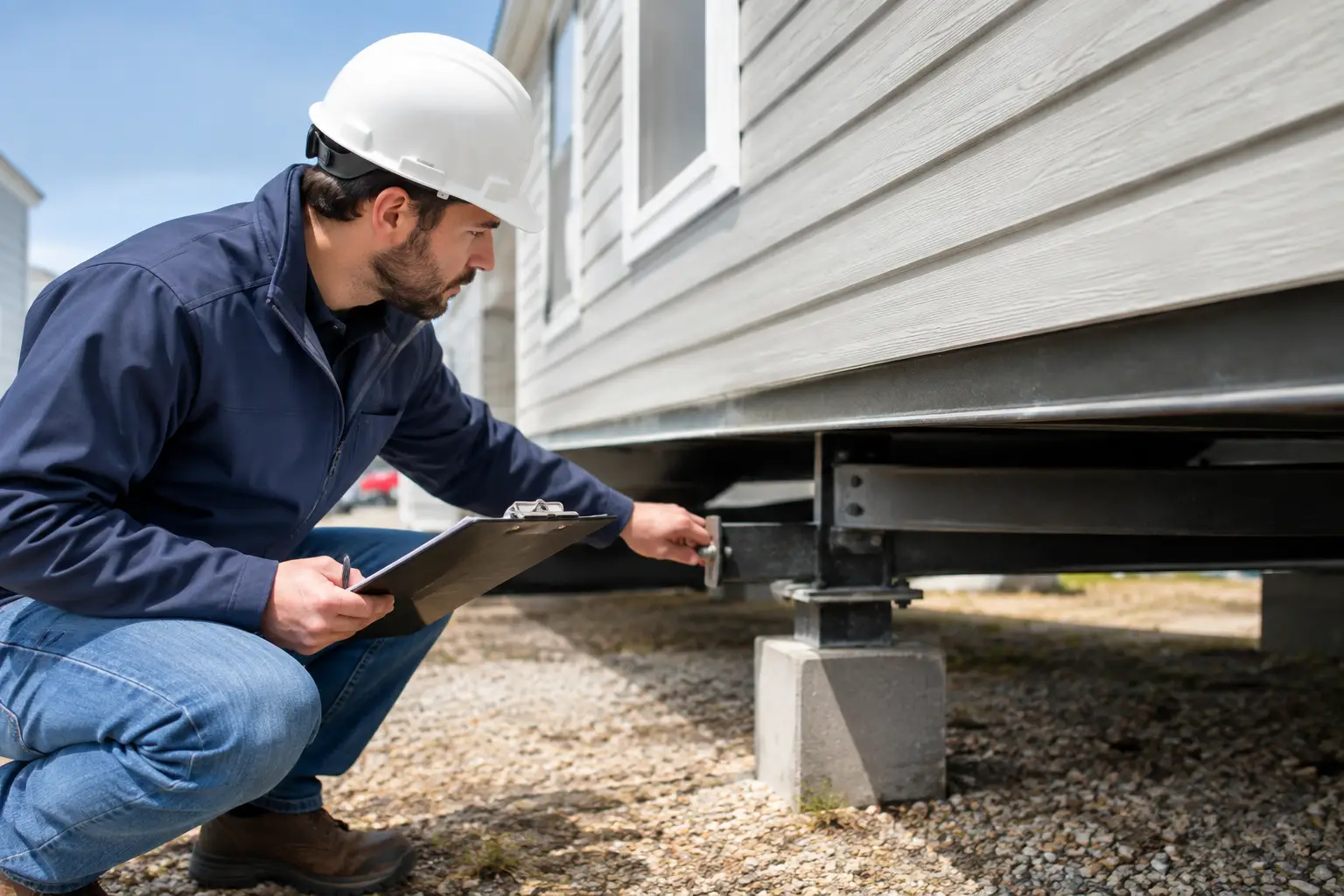
The inspection commonly reviews the home’s longitudinal and diagonal tie-down system, the number and spacing of anchors, strap tension and attachment points, pier placement, blocking, and the condition of the frame. The inspector also looks for signs that movement, moisture, corrosion, soil conditions, or prior repairs may have affected the system.
This is different from a standard home inspection. A general inspection may note visible concerns beneath a manufactured home, but a tie-down inspection is specifically focused on the support and anchoring arrangement needed for foundation or tie-down certification.
Why Tie-Down Documentation Matters in Florida
A manufactured home can look well maintained above the floor while having significant issues below it. Skirting may conceal loose straps, shifted piers, rusted hardware, unsupported areas of the frame, or anchors that are no longer performing as intended. Those conditions may not be obvious to a buyer during a showing and may not surface until an insurer, lender, or closing agent asks for documentation.
For buyers, the inspection provides a clearer picture of an important safety and stability system before they take ownership. If repairs are needed, that information can be addressed during negotiations rather than after closing.
For sellers, obtaining an inspection early can prevent a last-minute delay. A buyer’s lender or insurer may request a foundation or tie-down certification shortly before closing. Finding out then that repairs are required can create scheduling pressure and uncertainty for everyone involved.
For current owners, documentation may be requested when changing insurance carriers, renewing coverage, refinancing, or responding to an underwriting requirement. Not every insurer requests the same information, so it is wise to confirm exactly what form or certification is needed before scheduling service.
Key Components an Inspector Looks At
Anchors and Their Placement
Anchors transfer wind-related forces from the home into the ground. Depending on the installation, they may be auger-style anchors, concrete anchors, or another approved system. An inspector checks visible anchor locations, alignment, condition, and whether the anchor arrangement appears appropriate for the home and installation requirements.
Ground conditions matter. Florida soils can vary considerably, even within the same community. Saturated soil, erosion, standing water, or disturbed ground near an anchor may raise questions about its ability to perform as intended. An anchor that looks acceptable at the surface cannot always reveal every condition below grade, which is why an inspection is a professional assessment of observable conditions, not a guarantee against future movement or storm damage.
Straps, Tension, and Connections
Tie-down straps should be properly connected to the frame and anchors, free of significant damage, and tensioned correctly. A strap that is loose may not provide the intended resistance during high winds. A strap that is excessively tight can also create concerns, particularly if it places undue stress on components.
The inspector looks for corrosion, fraying, kinks, improper routing, missing hardware, and nonstandard repairs. Rust deserves close attention in Florida’s humid climate, especially in older homes and properties exposed to salt air. Minor surface discoloration and material loss are not the same issue, but a qualified inspector can document the observed condition and explain when further evaluation or replacement is warranted.
Piers, Footings, and Support Points
Tie-downs do not work in isolation. The home’s support system must also be evaluated because settlement or shifting piers can affect the frame and the connections attached to it. Inspectors review visible piers, pads or footings, blocking, shims, and the overall support arrangement.
Common concerns include cracked or displaced piers, deteriorated wood blocking, unsupported frame areas, makeshift materials, and inadequate bearing surfaces. A home may need repair even if its straps appear present and intact. Conversely, a structurally sound pier system does not eliminate the need for properly installed anchors and tie-downs.
Frame Condition and Signs of Movement
The steel chassis is the connection point for much of the anchoring system. The inspection includes visible portions of the frame and attachment areas, along with signs of settlement or movement. Doors that bind, uneven floors, gaps in skirting, or changes around utility connections may provide useful context, though they do not prove a tie-down failure by themselves.
A thorough report separates observed facts from recommendations. That distinction helps owners and real estate professionals understand what needs correction, what may require a specialist, and what documentation is available for the next step.
When to Schedule a Mobile Home Tie Down Inspection
The best timing depends on why the inspection is needed. Buyers should consider scheduling during their inspection period, while there is still time to review findings and request repairs or credits. Sellers often benefit from arranging it before listing or as soon as they know a manufactured-home transaction is likely.
Owners seeking insurance or refinancing should schedule as soon as a carrier or lender identifies the requirement. Waiting until a deadline can make a manageable repair feel like an emergency. If repairs are necessary, a follow-up inspection may be required before a certification can be completed.
It also makes sense to request an evaluation after a major storm, flood event, visible settlement, or work performed beneath the home. Contractors, plumbing repairs, pest activity, and ground disturbance can affect access or components under a manufactured home. A prompt inspection provides documentation of the condition found at that time.
What to Expect From the Process
Access is a practical part of the inspection. The inspector needs sufficient, safe access to the crawlspace perimeter and visible foundation components. Heavy stored items, damaged skirting, standing water, animals, or limited clearance can restrict what can be observed. If an area cannot be accessed, the report should clearly state that limitation.
The final documentation should identify observed conditions in plain language, include supporting photographs where appropriate, and explain whether repairs or additional evaluation are recommended. If the purpose is certification, the report or certification should follow the format required for that assignment. A repair estimate is usually separate from the inspection itself, since repair pricing depends on the contractor’s scope, materials, and site conditions.
Avoid assuming that every manufactured home needs the same work. Older installations, additions, roof-over structures, changes in grade, and prior modifications can all affect what is needed. The right answer comes from evaluating the specific home, not from a one-size-fits-all checklist.
Protect the Transaction Before the Deadline
A tie-down concern is easier to manage when it is discovered early, documented clearly, and assigned to the right repair professional. American Property Inspections provides manufactured-home foundation and tie-down certification services to help Central Florida buyers, sellers, owners, and agents move forward with clearer information. When a home is properly supported and its condition is documented, it removes one more source of uncertainty from an already significant property decision.