
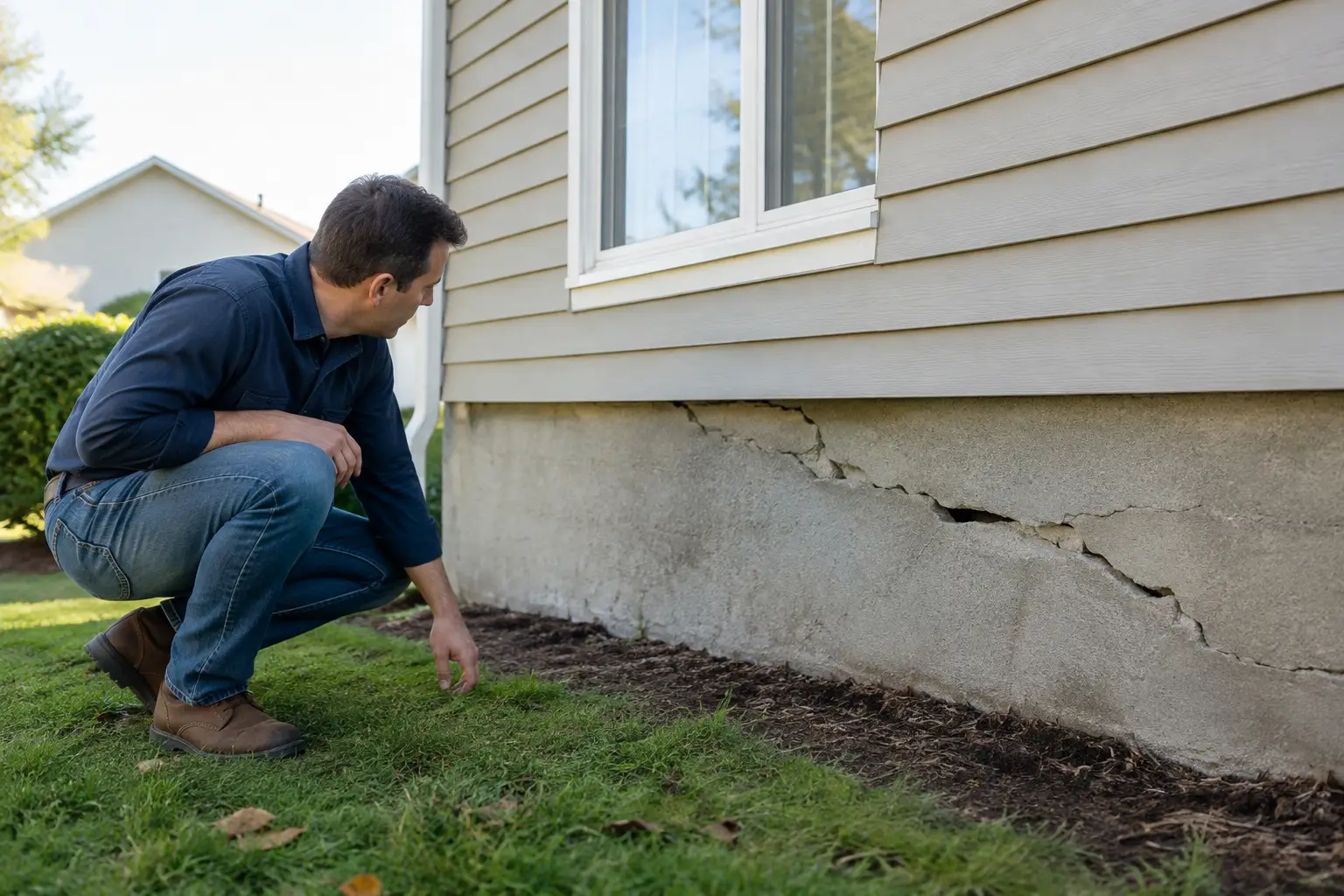
A hairline crack above a doorway may be a normal finishing issue. A crack that keeps growing, appears with sticking doors and sloping floors, or follows a stair-step pattern in block walls deserves closer attention. Knowing the top signs foundation movement helps Central Florida buyers and homeowners separate routine cosmetic aging from conditions that could affect a property’s structure, safety, repair budget, or transaction timeline.
Foundation movement does not automatically mean a home is failing or that major repair is unavoidable. Concrete cracks, drywall seams, and minor settlement are common in homes of many ages. The concern is the pattern: changes that are new, widening, repeated across several areas, or accompanied by other symptoms. A thorough inspection documents visible conditions so you can make an informed decision before a small concern becomes an expensive surprise.
What Foundation Movement Means
A foundation is designed to support a home while transferring its weight to the soil below. Movement occurs when the supporting soil shifts, settles unevenly, expands, contracts, or loses bearing capacity. The structure above may respond with cracks, out-of-square openings, uneven floors, and separation at joints.
In Central Florida, moisture is often part of the story. Heavy rainfall, poor drainage, roof runoff, plumbing leaks, changing groundwater conditions, and irrigation can alter the soil around a home. Drought periods can also dry soils and change how they support a structure. Construction methods, lot grading, tree roots, fill soil, and the age of the building all matter as well.
Not every visible crack reveals its cause on its own. A home inspection can identify and document observable indicators, but a licensed structural engineer may be needed when conditions suggest significant movement or when repair design is required. That distinction protects buyers and owners from both underreacting and paying for unnecessary work.
Top Signs of Foundation Movement to Watch For
Cracks that have a concerning pattern
Cracks are one of the most visible clues, but size, location, direction, and recurrence matter more than the fact that a crack exists. Diagonal cracks extending from the corners of doors or windows can indicate stress around openings. Stair-step cracking along concrete block or brick mortar joints can point to uneven movement. Horizontal cracking in a foundation wall or block wall can also warrant prompt evaluation, particularly if there is bowing or displacement.
Inside the home, watch for cracks that run diagonally across drywall, continue through more than one wall surface, reopen after patching, or appear alongside other changes. Wide cracks, cracks with one side offset from the other, and cracks that are visibly growing should be documented. A single stable hairline drywall crack is different from a pattern of active-looking cracking throughout the home.
Doors and windows that no longer operate normally
A door that suddenly rubs the frame, will not latch, swings open by itself, or develops uneven gaps may be responding to frame movement. Windows that become difficult to open, bind in their tracks, or show gaps around the trim can provide another clue.
These problems can also result from humidity, worn hardware, seasonal wood movement, or poor installation. They become more meaningful when they occur in several parts of the home or appear with cracking nearby. During an inspection, the goal is to look for the broader pattern rather than treat one stubborn door as proof of a foundation problem.
Uneven, sloping, or bouncy floors
Floors should feel reasonably level and stable under normal use. A noticeable slope, a low area that was not previously present, soft spots, separation between flooring and baseboards, or a floor that feels unusually springy can indicate movement or another structural concern.
For homes with crawlspaces, floor symptoms may relate to framing, piers, moisture damage, or inadequate support rather than the perimeter foundation itself. Manufactured homes have their own support and tie-down requirements, which is why a foundation and tie-down certification can be especially valuable when buying, selling, financing, or insuring one. The visible symptom may be similar, but the evaluation needs to fit the construction type.
Separation at walls, ceilings, trim, or exterior joints
Look closely where different parts of the building meet. Gaps between a wall and ceiling, separating baseboards, trim pulling away from walls, cracks at cabinet corners, and separation around garage doors can indicate that building components are shifting relative to one another.
Outside, separation between an attached porch and the home, gaps at window or door frames, cracking in stucco, or movement at exterior masonry joints should be noted. Some exterior finishes crack because of normal thermal expansion or installation issues. However, separation combined with interior cracking and operational problems deserves more attention.
Cracked or displaced concrete around the home
Driveways, walkways, patios, pool decks, and garage slabs often crack over time, especially in Florida’s heat and rain. These areas are not always structurally connected to the home’s main foundation, so a cracked sidewalk does not necessarily mean the house is moving.
Still, concrete that drops noticeably, separates from the house, develops a tripping edge, or channels water toward the structure may create a drainage problem and provide useful context. Pay particular attention to changes that direct roof runoff or surface water against the foundation area. Water management is often a practical part of preventing further soil-related concerns.
Water intrusion, soil erosion, or drainage changes
Foundation movement and moisture problems can influence each other. Water entering a crawlspace, standing near exterior walls after rain, downspouts discharging beside the home, washed-out soil, or persistent puddling may contribute to changing support conditions over time.
In some cases, a hidden plumbing leak is the source of excess moisture. In others, the issue is grading or a drainage system that no longer carries water away effectively. These conditions do not confirm foundation damage, but they should not be ignored, especially when cracks or floor changes are also present.
When a Foundation Concern Needs Prompt Attention
A buyer should seek further evaluation before the end of an inspection period when the report identifies multiple signs of movement, significant cracking, uneven floors, moisture concerns, or evidence of prior structural repair. Sellers benefit from understanding these conditions before listing, when there is more time to gather documentation and address issues without the pressure of a pending contract.
For homeowners, prompt action makes sense when changes are recent, worsening, or affecting the use of doors, windows, floors, or exterior drainage. Keep photographs with dates, measure notable cracks, and save records of repairs or prior evaluations. This history can help a qualified professional determine whether conditions appear stable or active.
If an engineer recommends repairs, ask for a clear explanation of the observed condition, likely cause, recommended scope, and whether drainage or plumbing corrections should happen first. Foundation repair is not a one-size-fits-all service. The right solution depends on the building, soil conditions, movement pattern, and source of the problem.
How a Property Inspection Helps You Move Forward
A comprehensive property inspection provides an objective starting point. The inspection process looks at accessible structural components, interior and exterior surfaces, floors, doors, windows, drainage conditions, and other visible clues that may relate to movement. Detailed reporting gives buyers, sellers, agents, and owners a documented basis for next steps.
American Property Inspections approaches these concerns with the same practical focus used throughout a property decision: identify what is visible, explain why it matters, and help clients understand when specialty evaluation may be appropriate. An inspection is not a substitute for engineering analysis, but it can prevent a condition from being overlooked during a high-stakes purchase or maintenance decision.
Do not let a single crack create panic, and do not let several warning signs go unexplored. A timely, well-documented evaluation gives you clearer options, whether that means monitoring a stable cosmetic condition, improving drainage, requesting further review, or planning repairs before they grow more disruptive.