A beautiful Central Florida home can look move-in ready while wood-destroying organisms are quietly damaging framing, trim, flooring, or other concealed wood components. So, what is a WDO inspection? It is a focused visual inspection for evidence of organisms that damage wood, along with conditions that may make a property more vulnerable to future activity.
For buyers, a WDO inspection can prevent an expensive surprise after closing. For sellers, it can identify concerns early enough to address them without a last-minute negotiation. And for homeowners, it provides useful documentation when protecting a property in Florida’s warm, humid climate.
What Does WDO Mean?
WDO stands for wood-destroying organisms. In Florida real estate, the term generally refers to organisms that can damage a structure’s wood or wood-based materials. The inspection looks for visible evidence of current activity, past damage, and conditions that could support an infestation or decay problem.
A WDO inspection commonly considers termites, wood-destroying beetles, and wood-decaying fungi. Each creates a different risk. Termites may feed on structural wood from the inside out, while certain beetles can leave small exit holes or powdery frass behind. Fungi can break down wood when persistent moisture creates the right conditions for decay.
The word “organisms” matters. A WDO inspection is broader than a basic termite check, even though termite concerns are often the reason a buyer or lender requests one.
What a WDO Inspection Includes
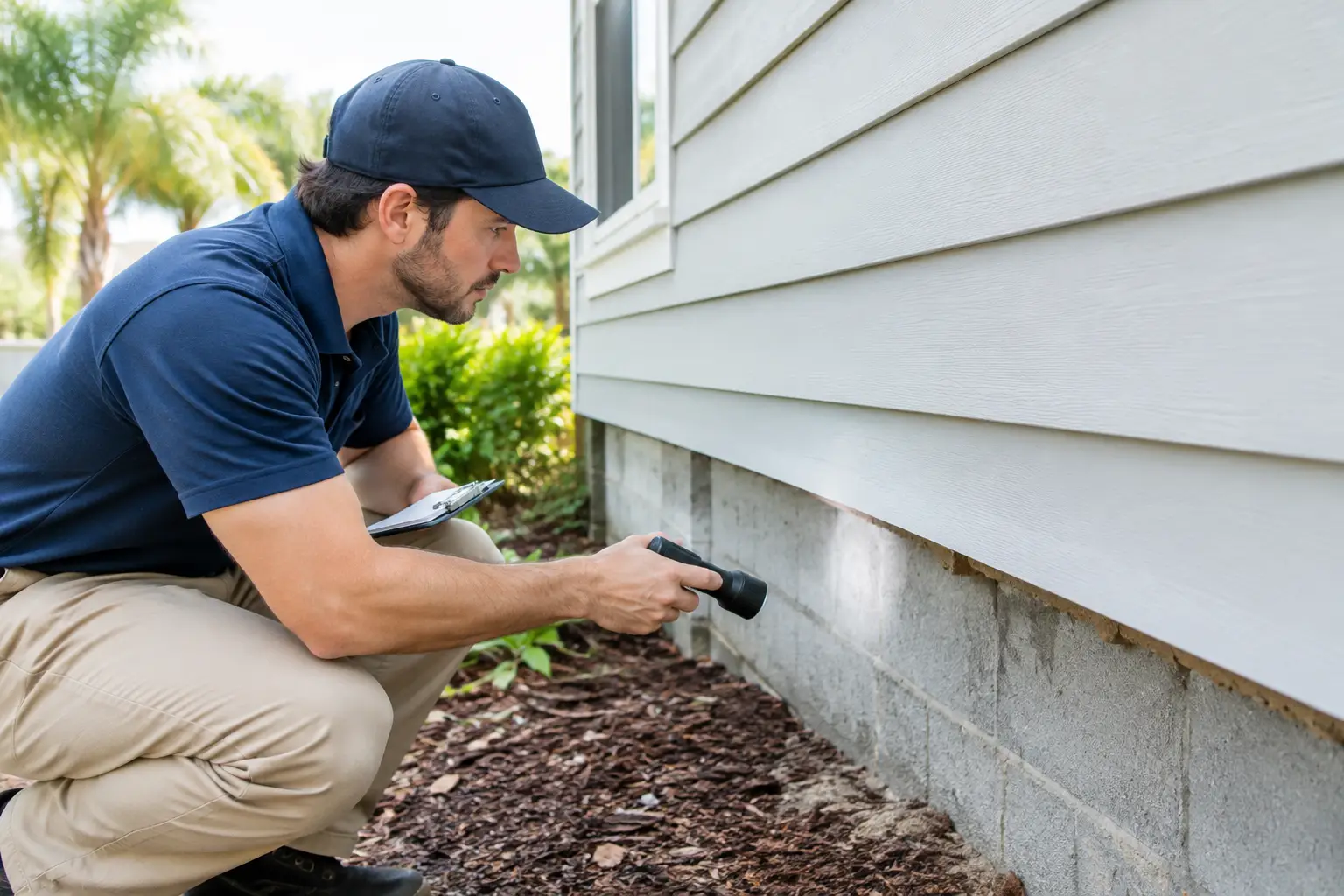
A qualified inspector performs a visual review of accessible areas where evidence of wood-destroying organisms may be present. This can include the exterior, foundation area, accessible attic spaces, garage, interior rooms, porches, decks, utility penetrations, and other visible structural components.
The inspector is looking for signs such as mud tubes, damaged or hollow-sounding wood, insect wings, termite droppings, beetle exit holes, fungal growth associated with wood decay, and prior treatment evidence. They also look for contributing conditions, including wood-to-soil contact, leaking plumbing, poor drainage, excessive moisture, unsealed entry points, and vegetation or debris against the structure.
The result is typically documented in a written report. Depending on the inspection’s purpose, the report may identify visible evidence of infestation or damage, areas that could not be inspected, and conditions that should be corrected or evaluated further.
A clean report does not mean a home is permanently protected from termites or moisture-related wood decay. It means the inspection did not find visible evidence in the accessible areas at the time of the inspection. That distinction is especially important in Florida, where changing moisture conditions and active termite pressure can affect a property over time.
What Inspectors Cannot See
WDO inspections are visual and noninvasive. Inspectors do not remove drywall, flooring, siding, insulation, cabinetry, or finished materials to search inside walls. Furniture, stored belongings, dense landscaping, locked spaces, and limited crawlspace access can also restrict the inspection.
This is not a weakness in the process. It is a practical boundary that should be clearly documented. If visible evidence points to concealed damage or activity, further evaluation, probing, repair exploration, or treatment recommendations may be appropriate.
WDO Inspection vs. Home Inspection
A standard home inspection and a WDO inspection support each other, but they serve different purposes.
A home inspection evaluates the readily accessible systems and major components of a property, such as the roof, electrical system, plumbing, HVAC, structure, exterior, interior, and appliances. During that process, a home inspector may observe moisture damage, wood deterioration, or possible termite evidence. However, a home inspection is not a substitute for a dedicated WDO inspection.
A WDO inspection is specifically focused on identifying evidence of wood-destroying organisms and the conditions that allow them to thrive. Because the scope is more specialized, it can provide the focused documentation a buyer, seller, lender, or real estate professional needs for that particular risk.
For many transactions, scheduling both inspections at the same time is the most efficient approach. It gives the buyer a fuller picture of the property before inspection deadlines expire and reduces the chance that a separate finding will delay the transaction later.
Why WDO Inspections Matter in Central Florida
Central Florida properties face conditions that can increase WDO risk: warm temperatures, high humidity, frequent rain, moisture intrusion, and abundant termite activity. Even a well-maintained home can develop a vulnerability when water is not directed away from the foundation, a plumbing leak goes unnoticed, or wood remains in contact with soil.
Termite damage can become costly because it may progress where it is difficult to see. A fresh coat of paint or a clean interior does not reveal what is happening behind a wall, beneath flooring, or at an exterior structural connection. Early detection gives buyers and owners more options, whether that means requesting repairs, obtaining treatment, adjusting a purchase decision, or correcting a moisture condition before damage grows.
For sellers, a pre-listing WDO inspection can be equally valuable. Finding an issue before a buyer does allows more control over timing, contractor selection, repair documentation, and disclosures. It can also help avoid a stressful renegotiation shortly before closing.
What Happens If the Report Finds a Problem?
A finding does not automatically mean a transaction should end. It means the parties need accurate information and a reasonable next step.
If the report identifies active infestation, a licensed pest control professional may recommend treatment. If it identifies visible damage, the next question is whether the damage is cosmetic, localized, or potentially structural. A qualified contractor, engineer, or other appropriate specialist may be needed to determine the extent of repairs.
When moisture or drainage is contributing to wood decay, treatment alone may not solve the underlying problem. Correcting leaking plumbing, improving grading, repairing roof or exterior leaks, reducing wood-to-soil contact, or improving ventilation may be necessary to reduce the chance of recurrence.
Buyers should also distinguish between evidence of prior treatment and evidence of current activity. A home with a previous termite treatment is not necessarily a problem property. In fact, documented treatment history can show that an issue was identified and addressed. The key is understanding what the report says, what follow-up is recommended, and whether there is any active or unresolved concern.
Is a WDO Inspection Required?
Whether a WDO inspection is required depends on the transaction. Some lenders, loan programs, insurers, contracts, or buyers may require it, while others may not. Even when it is not required, it is often a practical safeguard for a buyer purchasing a home in Florida.
Real estate agents and lenders can help clarify transaction requirements, but buyers should not treat a lack of requirement as proof that the risk does not exist. A WDO inspection is a relatively small step compared with the potential cost of discovering concealed termite damage or moisture-related wood deterioration after closing.
Commercial properties and smaller investment buildings can also benefit from WDO evaluations. The scope, access, and documentation needs may differ from a single-family home, but wood damage can affect operating costs, tenant safety, maintenance planning, and the value of the asset.
How to Prepare for a WDO Inspection
Good access leads to a more complete inspection. Sellers and homeowners can help by clearing access to the attic entry, garage walls, utility areas, exterior foundation, and any crawlspace entrance. Gates should be unlocked, pets secured, and stored items moved away from areas where possible signs of damage may be concealed.
It also helps to provide records for prior termite treatments, warranties, repairs, and known moisture issues. These documents do not replace the inspection, but they give helpful context if the inspector observes old treatment holes, repaired wood, or evidence of a past concern.
If you are buying a home, review the report promptly and ask questions before your inspection period ends. The most useful report is one you understand well enough to act on.
Choosing the Right Inspection Support
A WDO inspection should provide more than a simple pass-or-fail impression. You need clear documentation, a plain-language explanation of visible findings, and guidance on appropriate next steps when a concern is identified. That is particularly valuable when a property also needs a home inspection, 4-point inspection, wind mitigation inspection, mold sampling, sewer scope, or other specialty service.
American Property Inspections helps Central Florida clients coordinate property-condition services so they can make decisions with a clearer view of the risks involved. When inspection needs are organized early, buyers, sellers, and agents have more time to respond thoughtfully instead of reacting under closing pressure.
A WDO inspection cannot predict every future pest issue, but it can reveal visible warning signs before you take on a property’s responsibility. That knowledge can turn an uncertain next step into a better-informed decision.