A home can look move-in ready, have a clean inspection report, and still have a water-quality concern that cannot be seen, smelled, or tasted. For properties served by private wells, private well water testing gives buyers and owners documented information about the water their household will rely on every day. It can identify health-related contaminants, clarify the source of unpleasant water conditions, and help prevent an expensive surprise after closing.
Unlike a public water system, a private well is generally the property owner’s responsibility. That includes the well equipment, the area around the well, and the quality of the water produced. In Central Florida, where groundwater conditions, septic systems, agricultural activity, aging plumbing, and seasonal weather can all affect water quality, testing should be treated as a practical part of due diligence and ongoing home maintenance.
Why private wells need a closer look
A private well does not receive the same routine monitoring required for public water utilities. The water may be perfectly usable, but the owner must take the lead in confirming that it is. A clear glass of water is not proof that it meets appropriate drinking-water standards.
Some concerns are obvious. Sulfur odors, staining on fixtures, salty taste, sediment, or low water pressure can point to an issue with the water or well system. Other concerns are silent. Bacteria, nitrates, lead, arsenic, and certain other contaminants may have no noticeable taste, color, or odor.
Testing is particularly valuable during a real estate transaction. A buyer may be taking over a well that has not been evaluated recently, while a seller may not know whether changes in the surrounding property, drainage, or septic system have affected the water. A documented laboratory result helps replace assumptions with facts before a major purchase is finalized.
What private well water testing can reveal
The right test depends on the property, the well’s history, the location, and the reason for testing. A basic screening often starts with bacteriological testing for total coliform and E. coli bacteria. These results can indicate whether surface water, animal waste, septic-related contamination, or another source may be entering the well system.
Additional testing may be appropriate for nitrates and nitrites, especially where a property is near septic systems, agricultural land, livestock, or fertilized areas. Elevated nitrate levels can be a serious concern for infants and should be addressed promptly with qualified guidance.
Many Central Florida owners also request testing for conditions that affect usability and equipment life. Common examples include pH, hardness, iron, manganese, chlorides, sulfates, total dissolved solids, and hydrogen sulfide-related conditions. These do not always create an immediate health risk, but they can cause staining, scale buildup, corrosion, odors, poor appliance performance, and repeated treatment-system maintenance.
Depending on the home and local conditions, a more expanded panel may include lead, copper, arsenic, fluoride, or other contaminants. Lead and copper are often related to plumbing components rather than the groundwater itself, which is one reason collection procedures and the location of the sample matter. There is no single package that is right for every well. A qualified inspector can help determine which testing scope makes sense for the property and the client’s concerns.
Water testing and well inspections serve different purposes
A well inspection and a laboratory water test work best together, but they are not the same service. A physical well inspection can review accessible components and visible conditions, such as the wellhead, cap, pressure tank, pump operation, pressure switch, electrical connections, visible piping, filtration or treatment equipment, and signs of leakage or improper site drainage.
Water testing evaluates the sample collected at a specific time. It does not confirm that the pump will continue operating reliably, that the well has sufficient long-term yield, or that all underground components are free of defects. Likewise, a functioning pump does not confirm that the water is free of bacteria or other contaminants.
For buyers, combining these services provides a more complete picture. It helps identify whether the concern is water quality, equipment condition, treatment performance, or a combination of factors. That distinction matters when discussing repairs, credits, treatment options, or future maintenance costs.
When should a well be tested?
For a home purchase, testing should be scheduled early enough to allow time for laboratory processing and follow-up if results require additional evaluation. Waiting until the final days of an inspection period can create unnecessary transaction pressure, particularly when a retest or repair may be needed.
For current owners, annual bacterial testing is a sensible baseline for many private wells. Other testing should be considered whenever conditions change. Four situations deserve prompt attention:
- A flood, hurricane, heavy runoff event, or standing water has reached the well area.
- The well has been repaired, the pump or plumbing has been replaced, or the system has been opened.
- Water develops a new odor, taste, color, cloudiness, or staining pattern.
- Household members experience unexplained gastrointestinal illness, or a nearby septic, drainage, or land-use issue raises concern.
A newly drilled well, a previously unused well, or a property that has been vacant for an extended period also deserves testing before the water is relied upon for drinking and cooking. Owners with treatment equipment should test periodically to confirm that the system is performing as intended, not simply assume that a softener, filter, or reverse osmosis unit is addressing every possible concern.
Why proper sampling matters
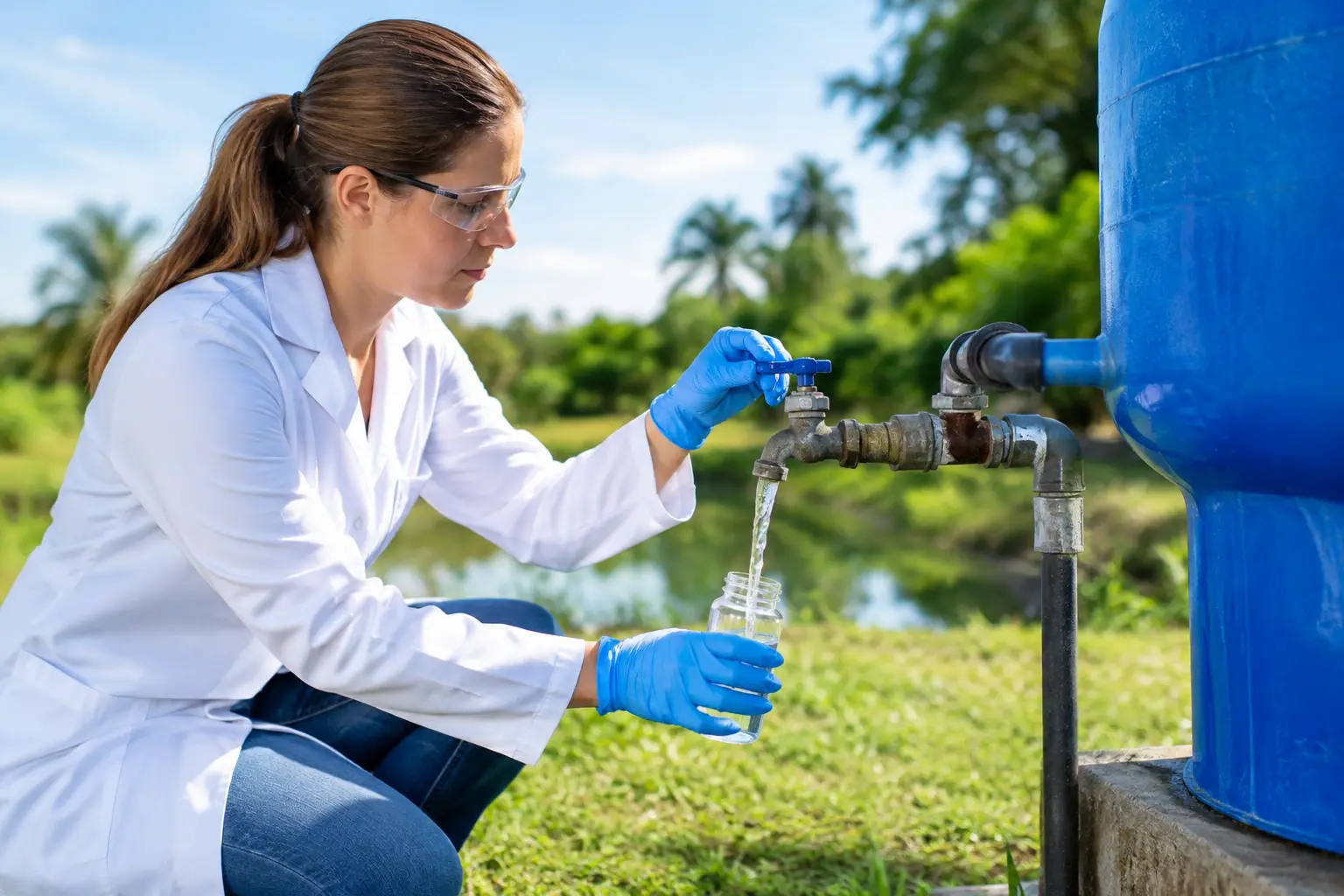
A water test is only as useful as the sample collected. Bacteria samples, in particular, require clean collection methods and a sterile laboratory container. Sampling from a faucet with an aerator, a dirty hose connection, or a recently disinfected fixture can distort the result. Treatment equipment, such as filters or ultraviolet systems, can also affect what the laboratory sees.
Before sampling, the testing provider should determine what question the test is intended to answer. Is the goal to evaluate untreated well water at the source? Is it to check the water actually delivered at a kitchen sink? Is the sample being collected to satisfy a lender, insurance requirement, buyer request, or personal maintenance concern? Each purpose can affect the recommended collection point and testing procedure.
Results should also be interpreted in context. A failed bacteria result may call for well disinfection and a retest, but it can also signal a damaged cap, poor grading around the well, a compromised seal, nearby contamination, or plumbing conditions that need further investigation. Simply shocking a well without finding the reason for recurring bacteria can turn a meaningful warning into a repeating problem.
What to do if results are not satisfactory
An unfavorable result does not automatically mean a property is unsafe to buy or impossible to insure. It means the next decision should be based on evidence rather than guesswork. The appropriate response depends on the contaminant, the concentration, the source, and whether the issue is isolated or recurring.
For example, hardness may be managed with water softening, while iron or sulfur conditions may require filtration, oxidation, or other treatment approaches. Bacterial contamination may require disinfection, repairs to the wellhead or site drainage, and confirmation testing. Nitrate concerns can require a more careful review of potential sources and properly selected treatment. Not every treatment system removes every contaminant, so the solution should match the laboratory findings.
During a transaction, clear documentation supports productive conversations between buyers, sellers, agents, and contractors. A report can help identify whether the issue is likely to be corrected before closing, priced into negotiations, or monitored by the buyer after purchase. For sellers, testing before listing can prevent a late-stage surprise and provide time to address known conditions without a rushed deadline.
Protecting the well between tests
Good well stewardship reduces risk, although it does not replace testing. Keep the area around the wellhead clear and graded so surface water drains away. Do not store fuel, chemicals, fertilizer, or waste near the well. Make sure the cap is secure and that the casing is not damaged or exposed to repeated flooding.
Septic maintenance matters as well. A poorly maintained or failing septic system can create health and property risks beyond the house itself. If the property has both a private well and septic system, evaluating each system as part of a purchase or maintenance plan provides a more responsible view of the property’s water and wastewater conditions.
American Property Inspections helps Central Florida clients coordinate well-related inspection needs with the same practical focus used across a property evaluation: identify the condition, document the findings, and give clients clear information for their next decision. A well should support confidence in a home, not leave buyers and owners wondering what is coming out of the tap.
Whether you are under contract, preparing to sell, or maintaining a home you have owned for years, schedule testing before a concern becomes a surprise. A timely result gives you something far more useful than reassurance alone: a clear basis for protecting the property and the people who depend on it.