
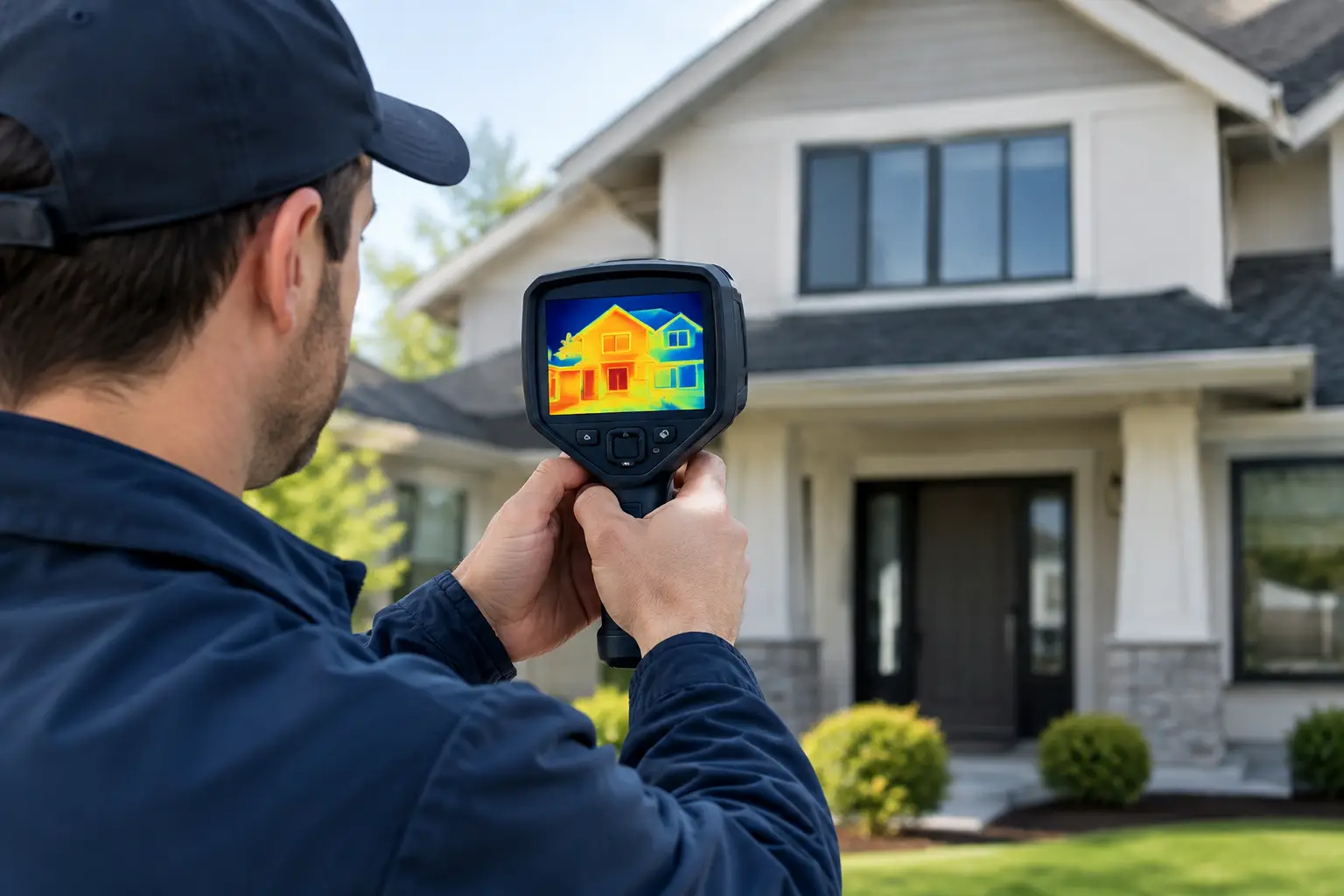
A ceiling stain may be dry by the time you tour a home. An overloaded electrical connection may be concealed behind a panel cover. A missing section of insulation may be invisible from the living room but expensive every month the air conditioner runs. A thermal imaging home inspection helps identify temperature differences that can point to concerns like these before they become costly surprises.
For Central Florida buyers, sellers, and homeowners, thermal imaging adds another layer of information to a visual property inspection. It can help an inspector focus on areas that deserve closer evaluation, document conditions clearly, and give clients a stronger basis for repair discussions, maintenance planning, or further specialist review.
What Thermal Imaging Shows During a Home Inspection
A thermal camera detects infrared energy and translates surface-temperature differences into a color image. Warmer and cooler areas appear differently on the screen, allowing trained inspectors to see patterns that the eye alone cannot see.
The camera does not see through walls or identify a defect by itself. Instead, it highlights unusual temperature patterns. Those patterns, combined with visible conditions, moisture-meter readings, building knowledge, and the property’s systems, can help identify conditions worth reporting or investigating further.
For example, a cooler area below a bathroom may suggest moisture associated with a plumbing leak. A warmer-than-expected connection in an electrical panel may indicate resistance, an overloaded circuit, or a connection that needs evaluation by a qualified electrician. A broad, uneven pattern along an exterior wall can point to missing insulation or air leakage.
This distinction matters. A good inspection report should not treat every color difference as a confirmed failure. It should explain what was observed, why it may matter, and what next step is appropriate.
Common Issues a Thermal Imaging Home Inspection Can Help Identify
Thermal imaging is particularly useful when it supports a thorough inspection of the home’s accessible components. In Florida properties, the most valuable findings often relate to moisture, electrical systems, insulation, and HVAC performance.
Hidden moisture and possible roof or plumbing leaks
Water often changes the temperature of building materials as it evaporates or moves through drywall, ceilings, flooring, or framing. Thermal imaging can help locate a suspicious area around a shower, under a sink, near a water heater, below a roof penetration, or beneath an air handler.
Not every cool area is a leak. Air-conditioning ducts, shade, recently used plumbing fixtures, and outdoor weather conditions can create similar patterns. That is why an experienced inspector verifies what can be verified at the time of the inspection and may recommend additional evaluation when moisture is suspected.
Finding a concern early can be especially valuable in Central Florida’s humid climate. Small water intrusions can contribute to damaged finishes, wood deterioration, and conditions that may support microbial growth if left unaddressed.
Electrical hot spots
Electrical components should operate within expected temperature ranges. A thermal scan of accessible electrical panels, breakers, wiring connections, and equipment may reveal elevated temperatures that are not visible during a standard visual review.
An unusually warm breaker or connection does not automatically identify the precise cause. It may be related to electrical load, a loose termination, component wear, or another issue. Still, it is a meaningful condition to document because electrical repairs are best handled before a connection overheats further or fails when the system is under demand.
Insulation gaps and air loss
Florida homeowners depend heavily on air conditioning, so insulation and air sealing directly affect comfort and operating costs. Thermal imaging can help identify areas where conditioned air may be escaping or where insulation coverage appears inconsistent, particularly around attic access points, exterior walls, windows, doors, and ductwork.
The results depend on having enough temperature difference between indoors and outdoors. On a mild day, insulation deficiencies may be harder to detect. A thermal image also cannot confirm insulation type, depth, or R-value without further evaluation. It can, however, help identify locations where closer review may be worthwhile.
HVAC and duct concerns
Thermal imaging may reveal temperature irregularities around supply registers, return areas, accessible ducts, and air-handling equipment. These patterns can support observations of disconnected ducts, inadequate insulation, air leakage, or uneven cooling.
Because HVAC performance depends on many factors, including equipment condition, refrigerant levels, airflow, duct design, and thermostat settings, thermal imaging is not a substitute for a full HVAC diagnostic service. It is a useful inspection tool for recognizing visible or accessible signs that a licensed HVAC contractor should evaluate further.
Why Timing and Conditions Matter
Thermal imaging is not equally effective in every situation. Weather, sun exposure, indoor temperature settings, recent rainfall, appliance use, and the age and construction of the home all influence what a camera can detect.
A west-facing wall heated by afternoon sun, for instance, may appear warmer for reasons unrelated to insulation. A recently operated dishwasher can affect cabinet temperatures. A roof leak that has dried completely may not produce a meaningful thermal signature during the inspection.
This is why thermal imaging should be performed by an inspector who understands building systems and can interpret results in context. The value is not simply in taking a colorful image. It is in knowing which patterns are normal, which deserve concern, and when a limitation should be clearly stated rather than overstated.
When Thermal Imaging Is Most Valuable
A thermal scan can be useful for many properties, but it is particularly helpful when a buyer wants additional information before finalizing a purchase, when a seller wants to identify potential concerns before listing, or when an owner is trying to track down an ongoing issue.
It can also be valuable after heavy rain, when there are signs of a past leak, when rooms cool unevenly, or when utility costs seem unusually high. Homes with older electrical components, recent renovations, additions, or a history of moisture concerns can benefit from the added perspective as well.
For new construction, thermal imaging may help identify inconsistent insulation or air-loss patterns while builder corrections are still easier to address. It should be scheduled at a practical stage of construction and used alongside a detailed new-construction inspection, not in place of one.
What to Expect in the Report
When thermal imaging identifies a reportable concern, the report should include clear photos, a plain-language explanation, the location of the condition, and practical guidance about the next step. Depending on the finding, that may mean monitoring an area, requesting repair documentation, consulting a licensed electrician, having an HVAC contractor assess performance, or obtaining a more invasive moisture investigation.
For a real estate transaction, this documentation can help buyers ask focused questions rather than relying on broad assumptions. Sellers can use it to make informed repairs or disclose known conditions accurately. Agents benefit from having a clear, professional description that keeps conversations centered on documented conditions and appropriate solutions.
American Property Inspections uses thermal imaging as part of a broader property-condition approach. The goal is not to create unnecessary alarm. It is to help clients see potential risks sooner, understand the limits of the observation, and make decisions with fewer unknowns.
A home may look well maintained and still have conditions developing behind a ceiling, inside an electrical panel, or around an HVAC system. Adding thermal imaging to the inspection process can provide the extra evidence needed to address a concern while there is still time to make a confident, well-informed decision.